Claim Free Estimates on HVAC Projects

Correct furnace sizing requires an ACCA Manual J load calculation, not just square footage. Climate, insulation, windows, and ductwork all affect BTU/h needs. Jimmy Gusky Heating And Air, LLC, with over 30 years of experience serving Washington, DC, performs professional assessments ensuring homeowners get accurate, efficient heating capacity for their specific home.
Why Does Furnace Size Matter for Your Home?
Furnace size determines whether a heating system keeps a home comfortable or wastes money every month. An improperly sized furnace, either too large or too small, causes comfort issues and higher energy bills. Homeowners in Washington, DC face real consequences when the heating capacity does not match their property.
What happens when a furnace is too small?
A furnace that is too small will struggle to heat the home. The system runs constantly, never reaching the thermostat setting on the coldest days. Rooms stay unevenly warm, and the equipment wears out faster from continuous cycling.
What happens when a furnace is too big?
A furnace that is too big will waste energy, hike up bills, and wear out faster. Short cycling occurs when the unit heats the space quickly, shuts off, and then restarts minutes later. This on-off pattern stresses components and leaves temperature swings throughout the house.
Jimmy Gusky Heating And Air, LLC brings over 30 years of experience helping homeowners select the right heating system. The team performs proper load calculations rather than guessing based on square footage alone. Getting the size right protects comfort, equipment lifespan, and monthly energy costs.
What Is a BTU and How Does It Affect Sizing?
A British Thermal Unit (BTU) measures heat output. Furnace heating capacity is expressed in BTUs, and this number tells homeowners how much warmth a system can produce. According to Carrier, square footage alone should not be used to determine the correct furnace size. A home’s climate, insulation, windows, and ductwork all influence the true requirement.
Choosing the wrong capacity creates real problems. An undersized furnace runs constantly and still leaves rooms cold. An oversized unit cycles on and off too frequently, wasting energy and wearing out faster. Neither outcome keeps a home comfortable.
How do BTUs relate to home heating needs?
BTUs quantify the heat a furnace delivers. A higher BTU rating means more heating power. Matching that power to the home’s actual heat loss prevents the inefficiency that comes from guessing.
Why does square footage fall short as a sizing method?
Two identical homes can need different furnace sizes. One with poor insulation and old windows loses heat quickly. The other, well-sealed and modern, holds warmth longer. Only a professional assessment captures those differences.
Jimmy Gusky Heating And Air, LLC handles furnace installation with proper sizing and thorough testing. The team removes old units safely and verifies the new system performs correctly. Homeowners receive a heating solution matched to their property, not a generic estimate.
How Do I Determine the Right Size Furnace for My Home?
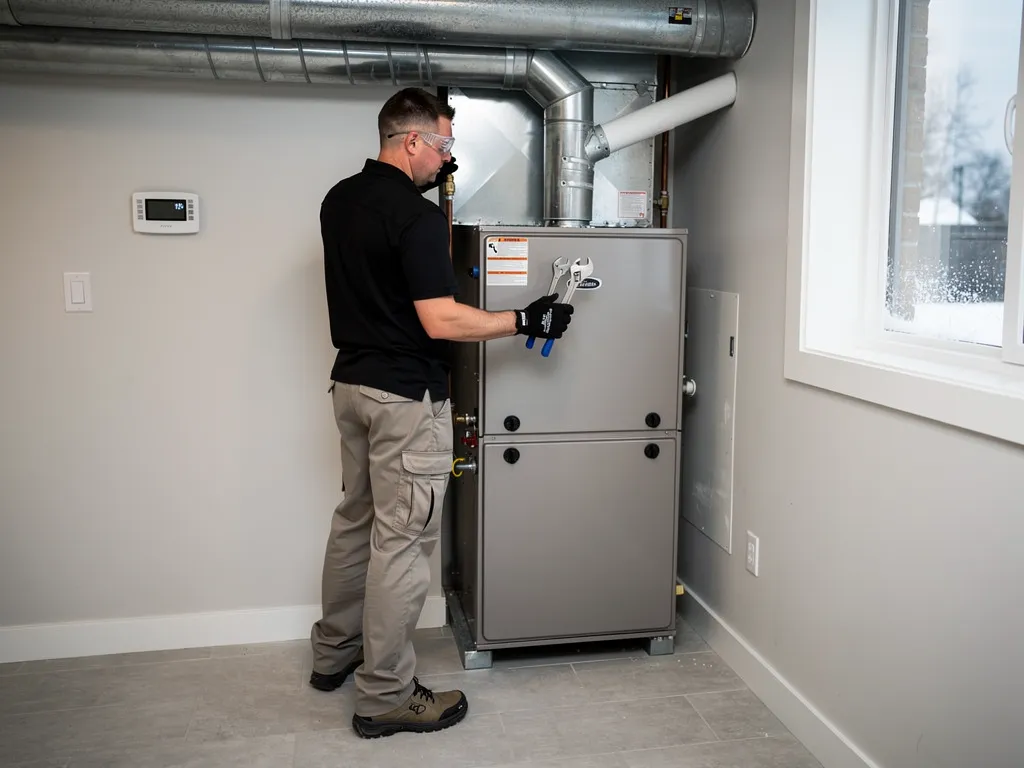
Homeowners asking How Do I Determine the Right Size Furnace for My Home? should start with a professional ACCA Manual J load calculation. This method determines the exact BTU/h heating capacity a home requires by evaluating climate, insulation, windows, ductwork, and overall home design. Square footage alone provides only a rough baseline and can lead to an oversized or undersized furnace.
Washington, DC’s climate zone determines the BTU factor per square foot of heated space. Insulation quality adjusts that factor. For a well-insulated home, the lower end of the range applies. For an older or poorly insulated home, the higher end is more appropriate. A professional assessment ensures the correct number is used.
What factors does a Manual J load calculation consider?
A Manual J calculation goes far beyond square footage. The technician measures window size and type, wall and attic insulation levels, air leakage rates, ductwork condition, and the home’s orientation to the sun. Local climate data for Washington, DC is also incorporated. This thorough analysis prevents the common mistake of selecting a furnace based on guesswork.
How does insulation quality change the BTU requirement?
Insulation directly affects heat loss. A home with modern, well-sealed insulation retains heat more effectively, so it needs fewer BTUs per square foot. An older home with drafty windows and thin attic insulation loses heat faster, requiring a higher BTU factor. The Manual J calculation quantifies these differences precisely.
Jimmy Gusky Heating And Air, LLC provides comprehensive assessments that include a full Manual J load calculation. The team listens to each client’s situation and explains the options clearly. The process follows these steps:
- A licensed technician inspects the home’s insulation, windows, ductwork, and layout.
- The technician performs the Manual J calculation using Washington, DC climate data.
- The team reviews the results and recommends a furnace with the correct BTU capacity.
- The installation is completed with attention to efficiency and code compliance.
This method ensures the furnace operates efficiently, avoids energy waste, and maintains steady comfort through Washington, DC winters.
What Are the Steps to Calculate Your Furnace Size?
Calculating furnace size starts with a simple square-footage formula, but accuracy demands a professional load calculation. The formula gives a rough baseline. The load calculation delivers the real answer.
Step 1: Measure the total heated square footage of the home. Walk through every room that receives heat. Include basements and finished attics. Exclude garages and unheated storage spaces.
Step 2: Multiply that square footage by the appropriate BTU factor for the local climate. Warmer climates need fewer BTUs per square foot. Colder climates need more. A well-insulated home uses the lower end of the range. An older or poorly insulated home uses the higher end.
Step 3: Schedule a professional load calculation. Carrier recommends this method over square footage alone. The calculation considers local climate, insulation levels, windows, ductwork, and home design. These factors change the final number significantly.
Step 4: Have the technician inspect the existing system. Jimmy Gusky Heating And Air, LLC starts with a full system check. The team explains what the inspection finds before recommending any solution.
Step 5: Approve the work and verify performance. Once a homeowner approves the plan, the crew completes the repair or installation. The team then verifies system performance to confirm the furnace operates correctly.
Why Does Square Footage Alone Fall Short?
Square footage provides a starting point, not a final answer. Two homes of identical size can need different furnaces. One home might have single-pane windows and thin insulation. The other might have triple-pane glass and spray foam. The load calculation captures those differences.
What Happens During a Professional Load Calculation?
A technician measures the home’s heat loss and heat gain. The assessment covers every room, every window, and every exterior wall. Ductwork condition matters too. Undersized ducts choke a properly sized furnace. The result is a BTU recommendation matched to the specific home, not a generic estimate.
What Common Mistakes Should You Avoid When Sizing?
Choosing the wrong furnace size creates two distinct problems, both of which waste money and reduce comfort. Homeowners often make the mistake of selecting a unit based on square footage alone or assuming bigger always means better. These errors lead to systems that either short-cycle constantly or run nonstop without reaching the set temperature.
Why Does an Oversized Furnace Cause Problems?
An oversized furnace delivers a blast of heat that satisfies the thermostat quickly, then shuts off. This pattern, called short cycling, prevents the system from running long enough to circulate air evenly through every room. The constant on-off cycling wastes energy, drives up monthly bills, and puts extra wear on components, shortening the furnace’s lifespan. Rooms near the thermostat may feel warm while distant rooms stay cold.
What Happens When a Furnace Is Too Small?
An undersized furnace runs continuously, struggling to keep up with heat loss on cold days. The system never reaches the thermostat’s set temperature, leaving the home consistently chilly. The blower motor and heat exchanger endure prolonged operation, which accelerates wear and increases the likelihood of breakdowns during peak winter months. Neither scenario delivers the steady, even warmth a properly sized system provides.
Jimmy Gusky Heating And Air, LLC has focused on honest recommendations and detailed workmanship since 1989. A professional load calculation, not guesswork, prevents both mistakes. The team measures the home’s insulation, window efficiency, ductwork condition, and local climate to specify the exact capacity needed. This approach eliminates the guesswork that leads to short cycling or insufficient heat.
FAQ
Why is square footage alone not enough to size a furnace?
Square footage ignores climate, insulation, windows, and ductwork, all of which affect actual heat loss. An ACCA Manual J load calculation accounts for these factors to determine the true BTU/h requirement.
What problems occur if a furnace is undersized?
An undersized furnace runs constantly without reaching the thermostat setting on cold days. This causes uneven heating between rooms and faster equipment wear from continuous cycling.
Who performs furnace sizing assessments in the Washington, DC area?
Jimmy Gusky Heating And Air, LLC performs professional load calculations and assessments for homeowners in Washington, DC. With over 30 years of experience, the family-owned team ensures accurate BTU/h capacity rather than relying on square footage guesses.
Conclusion
In closing, selecting the right furnace size protects your home’s comfort and your wallet. A professional load calculation, not square footage alone, reveals the exact BTU capacity your home needs. Jimmy Gusky Heating And Air, LLC brings over 30 years of experience to this critical decision, combining thorough inspection, honest assessment, and skilled installation to ensure your furnace operates efficiently through every Washington, DC winter. Trust the process, trust the professionals, and enjoy the steady warmth a properly sized system delivers.