Claim Free Estimates on HVAC Projects
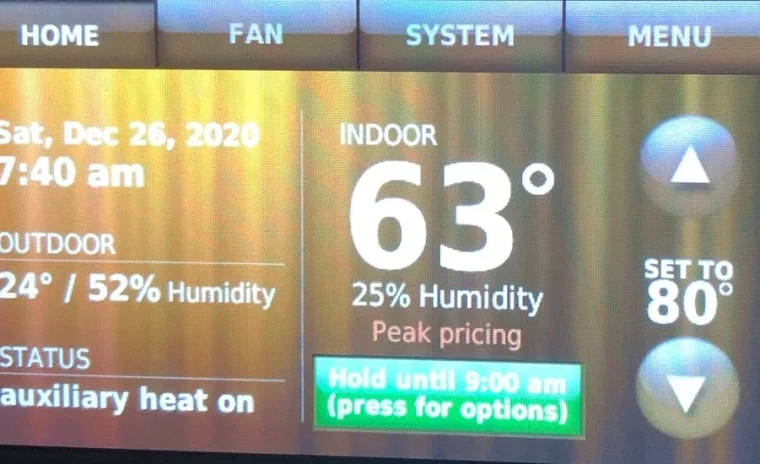
Placing your thermostat in the wrong location
Where you mount your thermostat matters far more than most homeowners realize. If it’s positioned near a window, above a heating vent, next to your kitchen, or in a drafty hallway, it’s reading the temperature of that specific microclimate instead of your home’s actual average temperature. The result? Your HVAC system gets bad data and overcompensates, running far longer than necessary and driving up your monthly bills.
In Washington, DC rowhouses and older homes, this mistake is especially common. Many thermostats end up in narrow hallways near front doors where cold drafts sneak in during January and February, or in sun-drenched living rooms where afternoon light streams through west-facing windows in July and August. When your thermostat thinks it’s 78 degrees because the sun is hitting it, your air conditioning keeps running even though the rest of your home is already cool. Conversely, a thermostat near a drafty entry can trigger your furnace to run continuously during a cold snap, wasting energy while your bedrooms stay perfectly warm.
The fix starts with location. Ideally, your thermostat should be on an interior wall, away from direct sunlight, exterior doors, windows, vents, and heat-generating appliances. It should sit in a commonly used room where temperatures reflect your household’s actual comfort needs. If your current setup is in a bad spot, relocating it is a job for a licensed HVAC contractor who can run new low-voltage wiring and ensure proper placement. Our team handles thermostat installation throughout the DC metro area, and we’ll assess your home’s layout, airflow patterns, and heat zones to find the optimal wall. Proper placement can cut unnecessary runtime by 20 to 30 percent, translating directly into lower energy bills and better comfort year-round.
Ignoring programmable settings and schedules
You bought a programmable or smart thermostat, but if you’re still running it in manual mode or you set it once and never touched it again, you’re leaving serious money on the table every single month. The whole point of programmable technology is to match your heating and cooling to your actual schedule, so you’re not paying to climate-control an empty house while everyone’s at work or school. Yet countless DC area homeowners never take the ten minutes required to program a basic weekly schedule, and their systems run at full capacity 24/7.
Here’s the reality: heating or cooling your home when no one is there wastes roughly 30 percent of your HVAC energy use. In the Washington, DC area, where summer humidity drives AC loads and winter temperatures regularly dip into the twenties, that waste adds up fast. If you leave for work at 8 a.m. and come home at 6 p.m., there’s no reason your air conditioning should be working hard to maintain 72 degrees all afternoon in an empty house. A simple programmable schedule can raise the setpoint to 78 or 80 while you’re gone, then start cooling back down an hour before you return. The same logic applies in winter: let the temperature drop a few degrees during the day and overnight, and you’ll see immediate savings on your heating bills without sacrificing comfort.
If the idea of programming sounds intimidating, don’t worry. Modern smart thermostats often learn your patterns automatically, and many can be controlled from your phone, so you can make adjustments on the fly. If you’re unsure where to start, our technicians can walk you through setup during any HVAC maintenance visit, or we can install and configure a new smart thermostat that does the heavy lifting for you. Even a basic seven-day programmable model will pay for itself in energy savings within a year. The key is to actually use the features you paid for, instead of treating your thermostat like a manual dial from 1985.
Using an outdated or incompatible thermostat
If your thermostat is more than ten or fifteen years old, or if it was never designed to work with your current heating and cooling equipment, it’s costing you money in ways you probably don’t even notice. Older mechanical thermostats with mercury switches can drift out of calibration over time, meaning the temperature they display isn’t the temperature they’re actually maintaining. Worse, if you’ve upgraded to a high-efficiency heat pump, variable-speed air handler, or multi-stage furnace but kept your old single-stage thermostat, the two devices simply can’t communicate properly. Your expensive, efficient HVAC system ends up short-cycling, running inefficiently, or failing to hit the comfort levels it was designed to deliver.
This mismatch is surprisingly common in Washington, DC, where many homeowners have replaced aging furnaces or air conditioning units in recent years but assumed their existing thermostat would be fine. The truth is that modern HVAC equipment relies on digital communication and multi-stage operation to optimize energy use. A basic two-wire thermostat can’t tell a variable-speed heat pump to ramp up gradually or a two-stage furnace to run in low mode first. Instead, the system defaults to simple on-off cycling, which wastes energy, increases wear and tear, and leaves you with uneven temperatures and higher bills. If you’ve noticed your system seems to run constantly or your home never quite feels comfortable despite a recent equipment upgrade, thermostat incompatibility is a likely culprit.
Upgrading to a compatible digital or smart thermostat unlocks the full potential of your HVAC investment. Our team has installed hundreds of thermostats across the DC metro area, and we make sure every unit is matched to your specific heating and cooling equipment. Whether you have a single-stage gas furnace, a multi-zone ductless system, or a high-efficiency heat pump, we’ll recommend and install a thermostat that speaks the same language. The result is better comfort, lower energy bills, and a system that finally works the way it was engineered to. If you’re unsure whether your current thermostat is compatible, contact us for a quick diagnostic. We’ll assess your setup and give you honest advice on whether an upgrade makes sense.
Failing to calibrate or update settings seasonally
Thermostats aren’t set-it-and-forget-it devices, even though most people treat them that way. Over time, sensors can drift, batteries can weaken, and the temperature your thermostat displays can become less accurate. A thermostat that’s off by even two or three degrees will cause your heating or air conditioning to run longer than needed, quietly inflating your energy bills month after month. And if you never adjust your programmed schedules when the seasons change, you’re likely heating or cooling your home more aggressively than necessary during shoulder months like April, May, September, and October.
In the Washington, DC area, where we experience true four-season weather, seasonal thermostat adjustments are crucial. Spring and fall bring mild days and cool nights, yet many homeowners leave their thermostats locked on the same aggressive heating or cooling schedules they used in January or July. The result? Your furnace or AC kicks on during perfectly comfortable weather, wasting energy on climate control you simply don’t need. A smarter approach is to review and tweak your thermostat settings at least twice a year. In late spring, raise your cooling setpoints by a few degrees and adjust your schedule to account for longer daylight and warmer evenings. In early fall, do the reverse for heating. Small changes add up to significant savings, especially during those transitional months when outdoor temperatures are moderate.
Calibration is another often-overlooked issue. If you suspect your thermostat isn’t reading accurately, compare its displayed temperature to a reliable standalone thermometer placed nearby. If there’s a consistent gap, some digital thermostats allow manual calibration adjustments in their settings menu. If your model doesn’t support calibration or the drift is severe, it’s time for a replacement. During any heating repair or air conditioning service call, our technicians can test your thermostat’s accuracy and recommend whether recalibration or replacement is the better move. Keeping your thermostat dialed in throughout the year ensures your HVAC system runs only when needed, saving you money and extending equipment life.
Neglecting HVAC maintenance that impacts thermostat performance
Here’s a truth that catches homeowners off guard: even a perfectly programmed, properly placed, state-of-the-art smart thermostat can’t fix a clogged air filter, dirty ductwork, or an HVAC system that’s overdue for maintenance. Your thermostat is the brain of your heating and cooling system, but it can only work with the equipment it controls. If that equipment is struggling due to neglect, your thermostat will call for longer and longer run times to reach your desired temperature, and your energy bills will climb accordingly. Regular HVAC maintenance isn’t just about preventing breakdowns; it’s about ensuring your thermostat can do its job efficiently.
In Washington, DC, where summer humidity loads strain air conditioning systems and winter heating demands are real, skipping maintenance is a costly mistake. A dirty air filter restricts airflow, forcing your blower motor to work harder and your system to run longer to move the same amount of conditioned air. Leaky or clogged ductwork means heated or cooled air never reaches the rooms it’s supposed to, so your thermostat keeps calling for more output even though your equipment is running nonstop. Refrigerant leaks, failing capacitors, and worn blower motors all reduce system efficiency, and your thermostat has no way to compensate except to run longer cycles. The end result is higher energy bills, uneven temperatures, and a system that feels like it’s always running but never quite keeping up.
The solution is straightforward: schedule professional HVAC maintenance at least once a year, ideally twice (spring for cooling, fall for heating). During a maintenance visit, our technicians inspect and clean your entire system, replace filters, check refrigerant levels, test electrical connections, clean coils, and verify that your thermostat is communicating correctly with your equipment. We also inspect ductwork for leaks and blockages, because even minor duct issues can sabotage thermostat performance. Think of it this way: your thermostat sets the target, but your HVAC system has to hit it. If the system is dirty, inefficient, or struggling, your thermostat will keep demanding more runtime, and you’ll keep paying for it. Regular maintenance keeps everything working in harmony, so your thermostat can deliver the comfort and savings it was designed for. If it’s been more than a year since your last tune-up, now is the time to schedule service and get your system back on track.